Home » About Kathleen
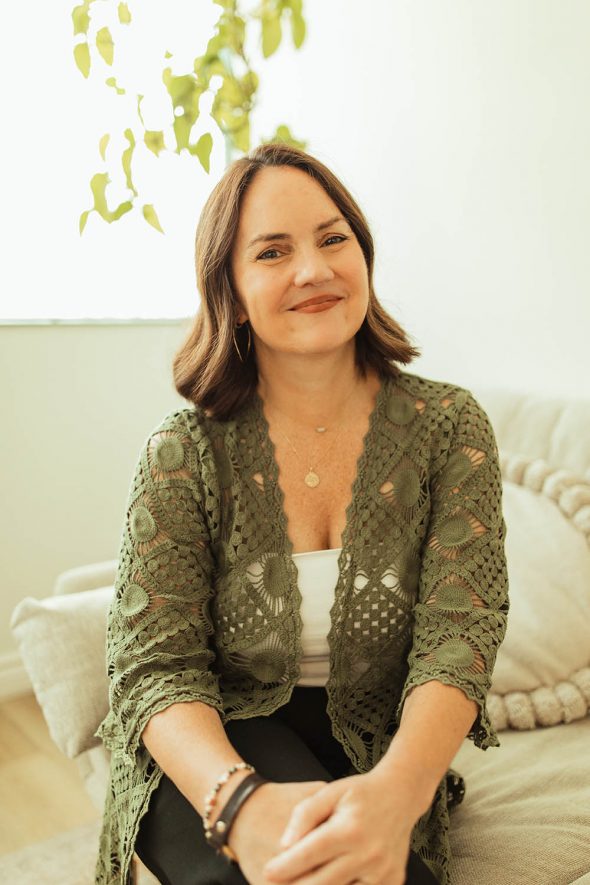
For over 30 years, Kathleen Osta has worked at the intersection of individual healing and systems transformation—guided by a fundamental belief that every young person can thrive when we create the conditions that support their development.
As founder of the Adolescent Thriving Collaborative, Kathleen brings together deep clinical expertise as a Licensed Clinical Social Worker (LCSW) and Certified Somatic Experiencing® Practitioner (SEP) with decades of systems-level leadership in educational equity. Her work translates cutting-edge neuroscience into practical, compassionate support for teens, families, and the adults who serve them.
Kathleen’s approach was shaped early in her career as a school social worker and Comer School Development Program facilitator in the Chicago Public Schools. Influenced by Dr. James Comer’s groundbreaking work demonstrating that environments influence learning and directly shape brain development, she recognized that supporting young people requires attending to individual and family well-being and changing the conditions and systems that surround them.
This dual focus has defined her career. She provides trauma-informed therapy to adolescents and families while consulting with schools and youth-serving organizations to create conditions where young people can heal, learn, and thrive. Her therapeutic approach is collaborative and strengths-based, drawing on extensive training in Interpersonal Neurobiology, Adolescent Development, Somatic Experiencing, Polyvagal Theory, Attachment Science, and Mindfulness and Compassion Practices.
As Managing Director at the National Equity Project—where she has served for over 25 years—Kathleen helped evolve the organization into a multiracial community of practitioner-leaders committed to educational equity. She recently co-led the Building Equitable Learning Environments (BELE) Network, a national collaboration of school districts, researchers, and philanthropic partners working to center student voice, co-design culturally sustaining approaches to teaching and learning, and improve student experience.
Her consulting work spans educational, philanthropic, and youth-serving organizations including clients like the W.K. Kellogg Foundation, Youth Guidance, the Chicago Community Trust, and the Alameda County Health Care Services Agency. She has contributed to the development of nationally recognized social-emotional learning programs including Youth Guidance’s EVOLVE, Becoming a Man (BAM), and Working on Womanhood (WOW).
Kathleen’s work is rooted in the hopeful science of adolescent development and trauma recovery. Her extensive clinical training includes certifications in Integrated Trauma Therapy, Somatic Experiencing, Somatic EMDR, the Safe and Sound Protocol (SSP), and most recently, Polyvagal Informed Yoga for Trauma Recovery. She believes deeply in every person and every community’s capacity to heal and thrive.
She translates complex neuroscience into accessible frameworks and tools that help parents understand their teen’s developing brain, support educators in creating engaging, trauma-informed learning environments, and guide organizational leaders in building healing-centered ecosystems. Her writing and thought leadership—on topics ranging from youth mental health and ecosystems of care to structural racism and healing-centered systems change—reflects her commitment to individual healing, community well-being, and collective liberation.
Kathleen holds a Master of Social Work from the University of Chicago’s School of Social Service Administration and a Bachelor of Arts in History and Spanish from The College of Wooster, where she graduated Phi Beta Kappa.
Based in North County San Diego, she brings warmth, wisdom, and three decades of experience to her work with teens, families, and the systems that serve them. Whether in the therapy room, the workshop space, or the collaborative planning table, she creates conditions for healing, growth, and thriving—always guided by the knowledge that change is possible, that contexts shape brain development, and that relationships regulate and heal our nervous systems across the lifespan.